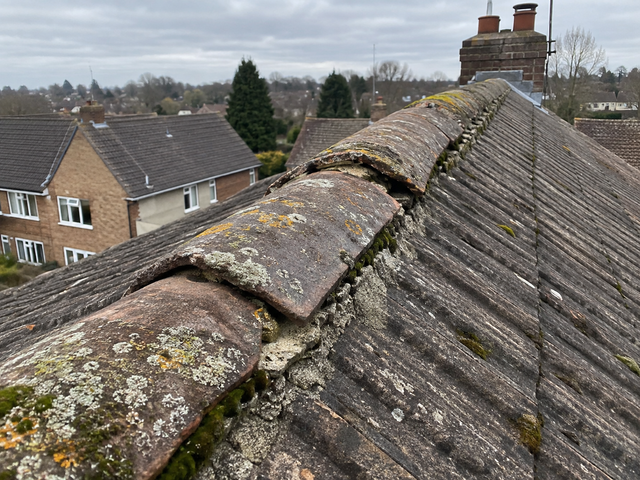
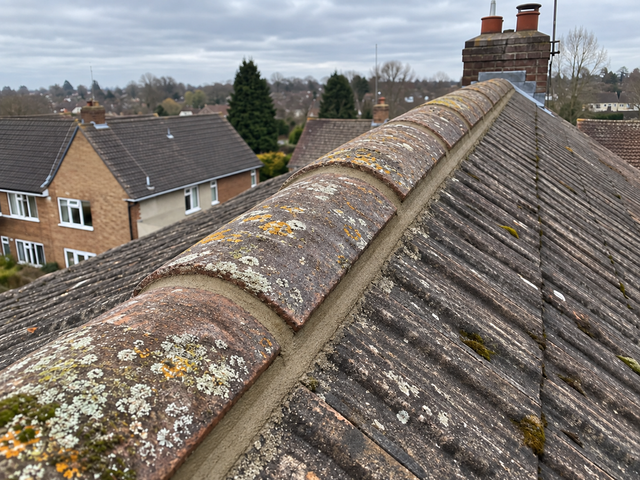
Why ridge tiles come loose
Mortar does not flex. A roof moves slightly with temperature and wind, so over the years the mortar bed cracks, lets in water and breaks up in frost. The first signs are usually gaps in the pointing or bits of mortar in the gutter.
Option 1: re-bedding in mortar
The ridge tiles are lifted, the old mortar is cleaned off and the tiles are re-bedded on a fresh mix and pointed. It keeps the traditional look and suits older and period roofs. Good practice is to add a mechanical fixing as well, so the tiles are not relying on mortar alone.
Option 2: a dry ridge system
A dry ridge system uses no mortar. The ridge tiles are screwed or clamped to a batten along the top of the roof, with a ventilated roll underneath and unions between the tiles. It allows for movement, ventilates the roof space and needs very little maintenance.
Which is right for your roof?
- Mortar keeps a traditional appearance and can be matched to existing work
- Dry ridge is more secure in high winds and less likely to need attention again
- Dry ridge unions are visible, which some people dislike on older houses
- On a short section of repair, matching what is already there is often simplest
Hip tiles and verges
The same applies to hip tiles on the sloping corners of a roof and to the verge at the gable end. Both are traditionally mortared and both are available as dry-fixed systems.
Do not leave loose ridge tiles
A ridge tile is heavy. If one is rocking or has slipped, have it secured before the next storm.