1. Stay safe
- Keep away from the area below loose tiles, slates or chimney pots
- Do not go onto the roof, especially in wind or rain
- If water is near light fittings or sockets, switch off the circuit at the consumer unit
- If a ceiling is bulging with water, stay out of that room
2. Limit the damage inside
Catch drips in buckets, move furniture and valuables and lift rugs. If it is safe to get into the loft, a bucket or plastic sheet under the leak protects the ceiling below.
3. Record everything
Take dated photos and video of the damage from the ground and inside the house, including any tiles or debris on the ground. Keep damaged materials if you can. Your insurer will want evidence of what the storm did.
4. Call your insurer and a roofer
Tell your insurer as soon as possible and ask what they need before work starts. Many policies allow emergency work to stop further damage, but check your own. A roofer can make the roof watertight with a temporary repair or cover, then quote for the permanent repair.
What an emergency roof repair involves
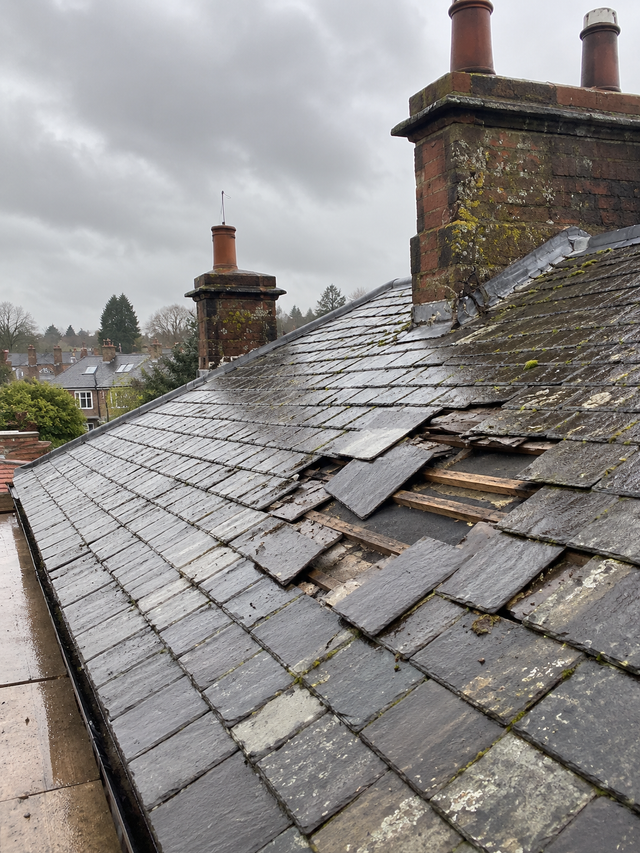
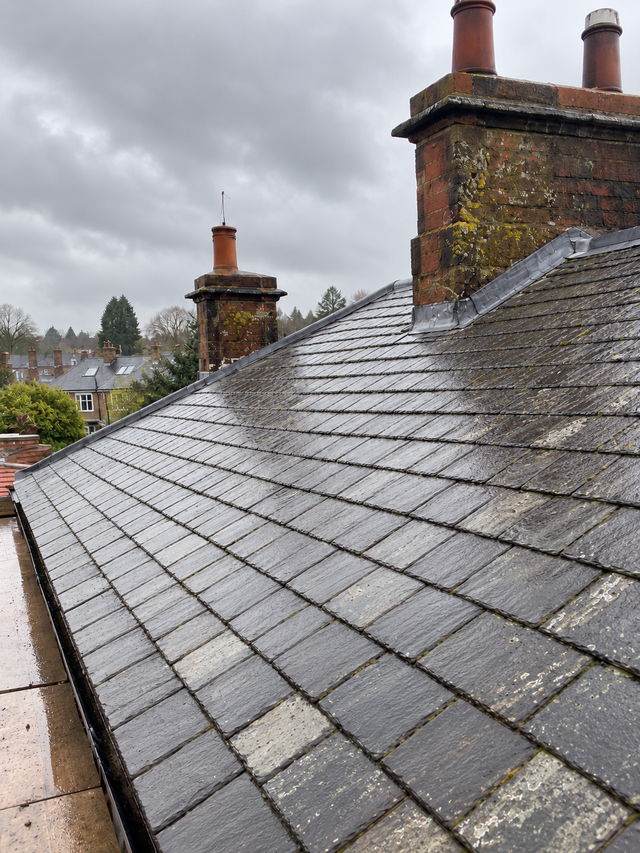
The first visit is about making the roof safe and watertight: securing or removing loose material, covering open areas and stopping the leak. The permanent repair follows once the weather allows and any insurance approval is in place.
After the storm
Even if nothing looks wrong, check the roof from the ground with binoculars and look in the loft for daylight or damp. Storm damage is not always obvious on the day.